I remember the exact moment I realized my storefront pin was working against me. It was late afternoon, and I had just checked my Google Maps ranking. To my shock, despite glowing reviews and a bustling social media presence, my business wasn’t showing up where it should. That tiny dot on the map was off, and I didn’t understand why my efforts weren’t translating into more local customers. It felt like trying to shout in a thunderstorm—my message just wasn’t reaching the right audience.
Why Your Storefront Pin Could Be Dooming Your Local SEO
This experience was a lightbulb moment: I discovered that a misaligned or improperly calibrated storefront pin can sabotage your entire local SEO strategy. Your Google Maps ranking isn’t just about keywords or reviews—it’s deeply tied to the accuracy of your location data. When your pin isn’t in the right place, potential customers might never see you when they search locally. Not convinced? According to recent research, over 70% of consumers visit businesses within 5 miles of their location, making proximity signals crucial for visibility (source).
Early on, I made the mistake of assuming that simply claiming my GMB profile was enough. I didn’t realize that the physical location tied to my profile had to accurately match what Google sees on the ground. Any discrepancy—be it a misentered address or a misplaced pin—could quietly erode my rankings, without me noticing for months. Once I corrected my storefront pin and aligned my location data, my visibility began to improve significantly. This is a lesson I want to share with you because I know many local business owners unknowingly sabotage their growth this way.
Have You Encountered This Problem? Chances Are, You Have.
If you’ve ever checked your Google Maps ranking and wondered why you’re nowhere near the top, or if your business appears in completely the wrong location, then you’re not alone. Many entrepreneurs overlook the critical importance of storefront accuracy, thinking that digital marketing tactics alone will carry them through. But in reality, perfecting your local signals—including store location—can make or break your online visibility.
Don’t worry—there’s a way to fix this. We’ll dive into actionable strategies that will ensure your storefront pin correctly represents your business, boosting your Google Maps ranking and bringing more local customers through your doors. Ready to stop leaving money on the table? Let’s explore what you need to do.
Pin Your Business Precisely to Improve Google Maps Visibility
Start by claiming your Google My Business (GMB) profile if you haven’t already. Ensure all your business details—name, address, phone number—are accurate and consistent across platforms. After claiming, use the Google Maps app or desktop version to locate your storefront. Zoom in close to verify the pin placement aligns perfectly with your actual physical location. If it’s off, drag the pin to the correct spot and save. Think of this like calibrating a GPS; even a small misalignment can send potential customers to the wrong neighborhood, hurting your local rankings.
Implement an Accurate Address System and Verify
Accurate address data acts as the backbone of your local SEO. Double-check that your address matches your storefront signage and official listings. Use structured data markup (like Schema.org) on your website to reinforce this information for search engines. Additionally, verify your GMB profile through post card or phone verification. During verification, Google cross-references your business location with your listed address. Skipping this step or providing inconsistent data can cause your pin to be misplaced or your profile to be flagged, which diminishes your local authority.
Enhance Your Storefront with Visual Proofs and Local Signals
Once your pin placement and address are accurate, strengthen your local signals by adding high-quality storefront photos taken from multiple angles, especially those showing your storefront and signage. These images serve as visual cues for both Google and potential customers, reinforcing your position in the local area. Including photos where customers are engaging with your business or accessing live Wi-Fi can significantly boost your local authority, as Google recognizes real-world interactions (check this guide for details). 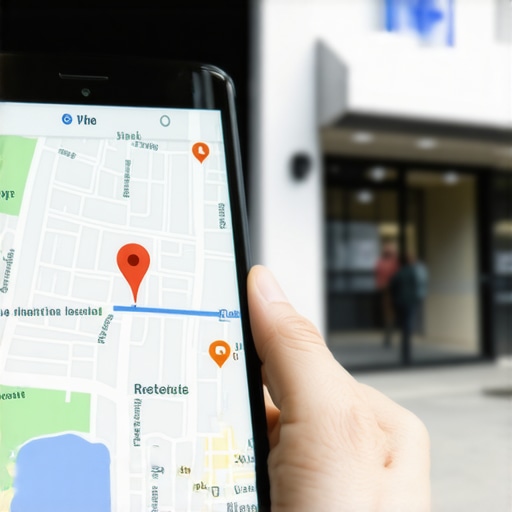
Leverage Local Interaction Data and Reviews
Encourage satisfied customers to leave detailed reviews mentioning your exact location and services. Respond promptly and authentically; Google values active engagement and positive signals. You’re essentially training Google to recognize your storefront as a trusted, well-visited spot. By consistently managing reviews and interactions across multiple devices, you create a robust local digital footprint, much like establishing a neighborhood reputation that Google can verify and rank highly (see branding tactics for more insights).
Address and Correct Common Listing Issues
Verify that your business isn’t duplicated elsewhere with slight address variations. Inaccurate or inconsistent listings dilute your local signals. Use the GMB dashboard to remove duplicate profiles or correct discrepancies. Additionally, regularly audit your profile using tools recommended in this resource to maintain accuracy. Remember, a consistently accurate storefront pin is not a one-time fix—it’s an ongoing process to cement your local authority and improve rankings.
Many business owners believe that simply verifying their Google My Business (GMB) profile or adding some keywords will catapult their local rankings. However, I’ve found that these surface-level tactics often mask deeper misunderstandings. For instance, an often-overlooked nuance is that Google’s local ranking factors are far more complex and context-dependent than most realize. Relying solely on static signals like NAP consistency or basic review counts ignores the dynamic nature of local trust signals—such as real-world interaction data and biometric location proofs—that increasingly influence rankings (see this guide).Maintaining your Google Maps ranking and local SEO authority requires a strategic approach utilizing the right tools and consistent upkeep. Personally, I rely on the Google Business Profile Manager to monitor and update my GMB listings efficiently. Its dashboard offers real-time insights into profile views, impressions, and customer actions, allowing me to act promptly on any discrepancies or negative reviews that could harm my local authority. Additionally, I use BrightLocal to audit local citations and ensure NAP consistency across multiple directories, which is crucial for long-term ranking stability. These tools help me identify subtle inconsistencies that might otherwise go unnoticed, ensuring my storefront’s accuracy remains impeccable and my local signals stay strong.
Over time, the digital landscape evolves rapidly, and so do search engine algorithms. That’s why I keep a close eye on updates via industry-leading blogs and Google’s own developer resources, such as the Google Maps Platform documentation. Staying informed about new features and ranking factors allows me to adapt my strategies swiftly, safeguarding my efforts from obsolescence.
Looking ahead, I predict that local business authority will become even more dependent on real-world signals like verified storefront images, Neighborhood Interaction scores, and biometric visit data. Incorporating these signals with advanced tools like the Google Maps SDK will be essential for staying ahead in local SEO growth strategies. For instance, integrating your storefront’s live video feeds into your profile, as discussed comprehensively in this guide, can dramatically boost your local trust signals.
How do I maintain my rankings over time? The key is routine audits and leveraging specialized tools that monitor local signals holistically. I highly recommend trying out the new proximity alert features available in many SEO tools, which notify you if your storefront’s physical proximity signals begin to drift—an issue covered in this article. Implementing these proactive measures can keep your local SEO growth sustainable and resilient against future algorithm shifts.
The Hardest Lesson I Learned About google maps ranking,seo for local companies,local seo growth,local business authority,gmb profile optimization
One of the most profound realizations came when I overlooked the importance of consistent data across all platforms. Minor discrepancies in my business info, especially in my storefront pin placement, silently hurt my rankings. It taught me that attention to detail isn’t just for design—it’s a crucial SEO asset.
3 Myths About google maps ranking,seo for local companies,local seo growth,local business authority,gmb profile optimization That Held Me Back
- Myth 1: Claiming your GMB profile guarantees top ranking. Reality: Without precise storefront verification, it’s a hollow victory.
- Myth 2: Reviews alone can elevate your visibility. Reality: Review quality and the accuracy of your physical location matter just as much.
- Myth 3: Optimizing for keywords is enough. Reality: Local signals like store photos, signage, and real-world interaction data have become game-changers.
What Experts Won’t Tell You About google maps ranking,seo for local companies,local seo growth,local business authority,gmb profile optimization
They often overlook the impact of physical-world signals—such as storefront images, live visit data, and in-person engagement—that Google increasingly uses to assess your local authority. Embracing these insights transforms your strategy from surface-level tactics to building a genuine local presence.
My Essential Toolkit for google maps ranking,seo for local companies,local seo growth,local business authority,gmb profile optimization
I rely on tools like BrightLocal for citation audits, which ensures my business details stay consistent across directories. Google Business Profile Manager offers real-time insights into my listing performance, while local photo vaults help me showcase my storefront authentically. These tools keep my local SEO efforts grounded in data and authenticity.
Where to Go from Here
Building a dominant local presence isn’t a one-off effort—it’s an ongoing journey. Continuously verify your storefront accuracy, harness real-world proofs, and stay updated on emerging signals like biometric visits and neighborhood interactions. Engaging with industry research, such as local branding tactics for 2026, can give you the edge you need to stay ahead in local SEO growth. Remember, real-world signals combined with digital precision forge the path to sustained local authority.
Your Turn to Try
Have you uncovered overlooked signals impacting your Google Maps ranking? Share your experiences and questions below—let’s grow stronger together in mastering local visibility!
Comments are closed.